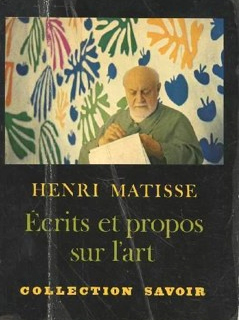
“What I seek above all is expression.” Henri Matisse
Year 1940. War has broken out. Matisse is 70 years old. He is in poor health. The Third Reich has labelled him one of the “degenerate artists,” and he refuses to exhibit his work. And yet, in the paradise of Nice, where he had settled in the early 1930s, he is about to embark on a second chapter of his life.
Henri Matisse wrote frequently to his son, Pierre, who had been working as an art dealer in New York since 1932. Three of his remarks caught my attention, and I’d like to share them with you.
How long to paint a picture?
To Pierre Matisse, September 18, 1940
“Fortunately, I’ve just almost finished—or perhaps completely finished—a painting I began a year ago—and which I’ve pursued as an adventure—in short, almost every one of my paintings is an adventure; that’s what makes them interesting—since I only reveal them once the adventure is over and successful, I’m the only one who bears the risks. So this painting, which began very realistically with a beautiful brunette sleeping on my marble table amid fruit, has become an angel sleeping on a violet surface—the most beautiful violet I’ve ever seen—her flesh is a pulpy, warm floral pink—and her dress, the corsage a very soft pale periwinkle blue, and the skirt a soft, caressing emerald green (with a touch of white in it), all set against a luminous jet-black background.”
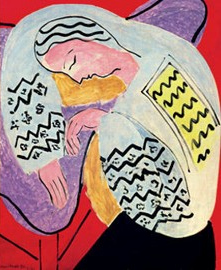
La Dormeuse, Paris, private collection.
« I must be so deeply immersed in, so thoroughly imbued with my subject that I can draw it with my eyes closed.»
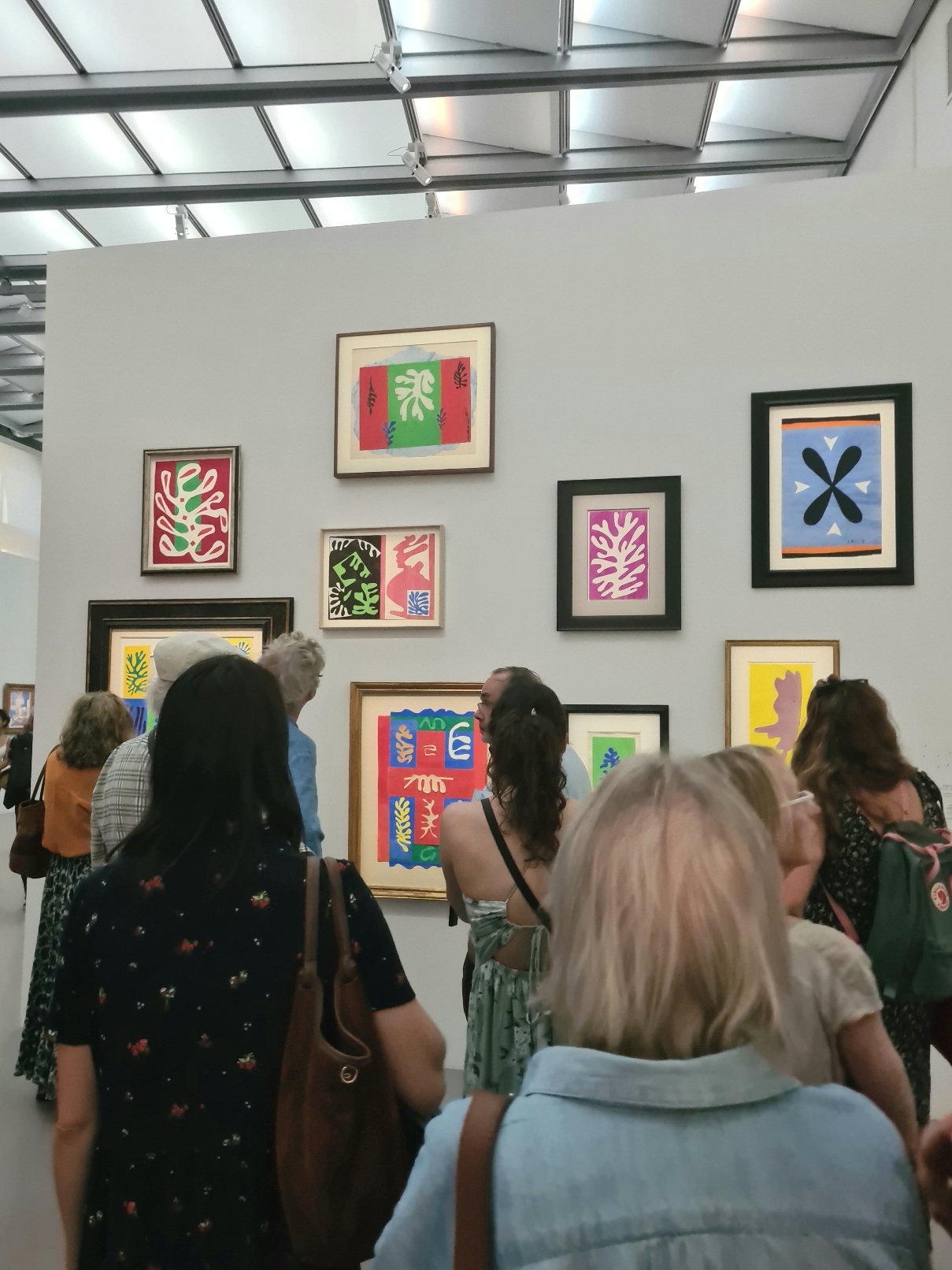
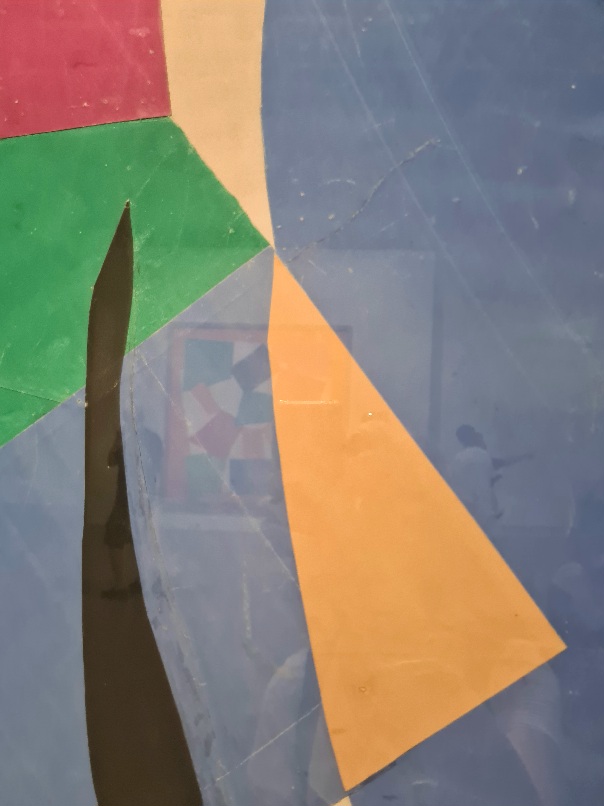
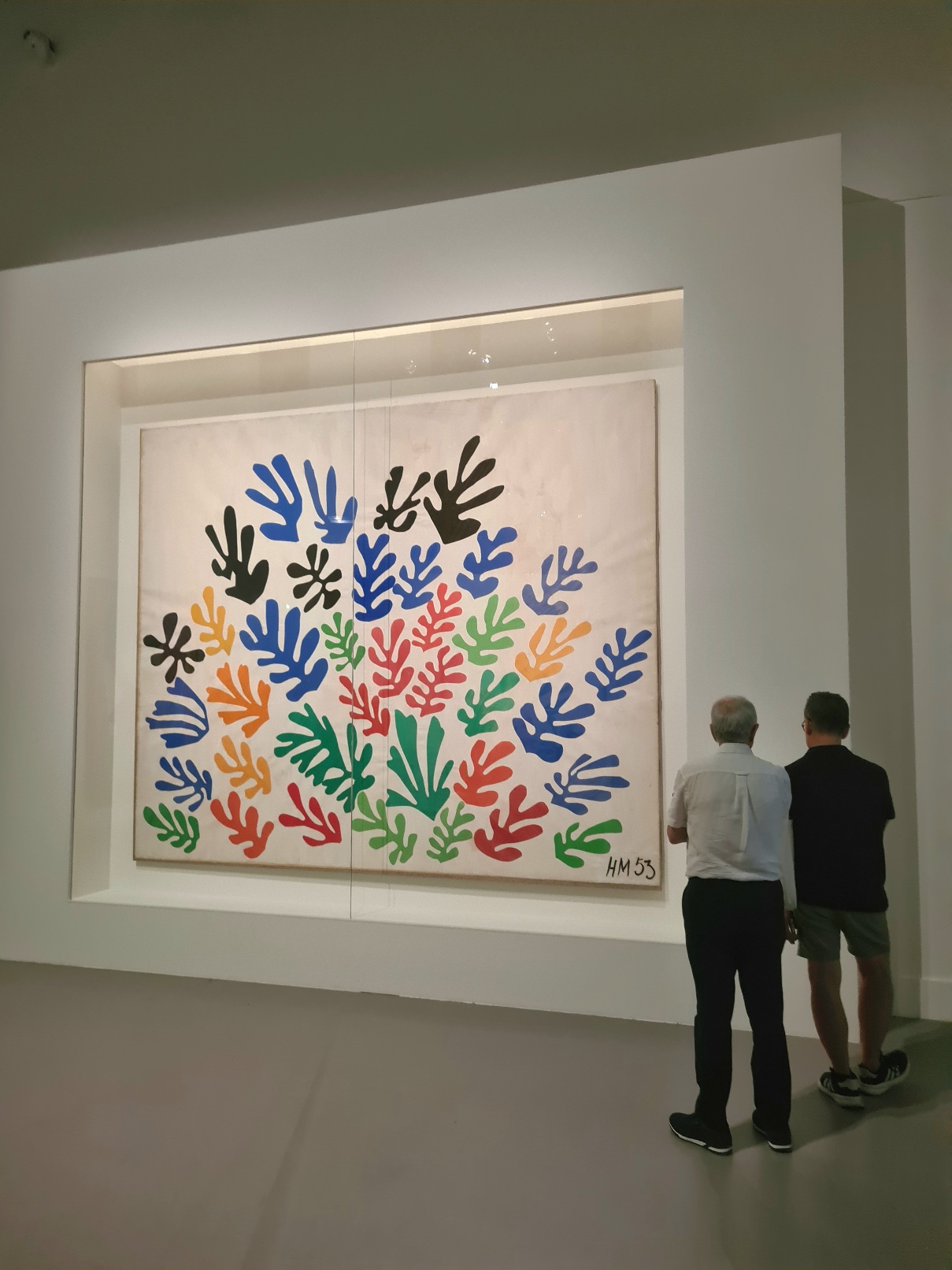
Below, I’m sharing a few photos from the “Matisse, 1941–1954” exhibition at the Grand Palais last spring. Candies for the eyes!
What did Matisse see?
Matisse settled permanently in Nice, where he shared these thoughts with Régine Pernoud for « Le Courrier de l’U.N.E.S.C.O. » in 1953.
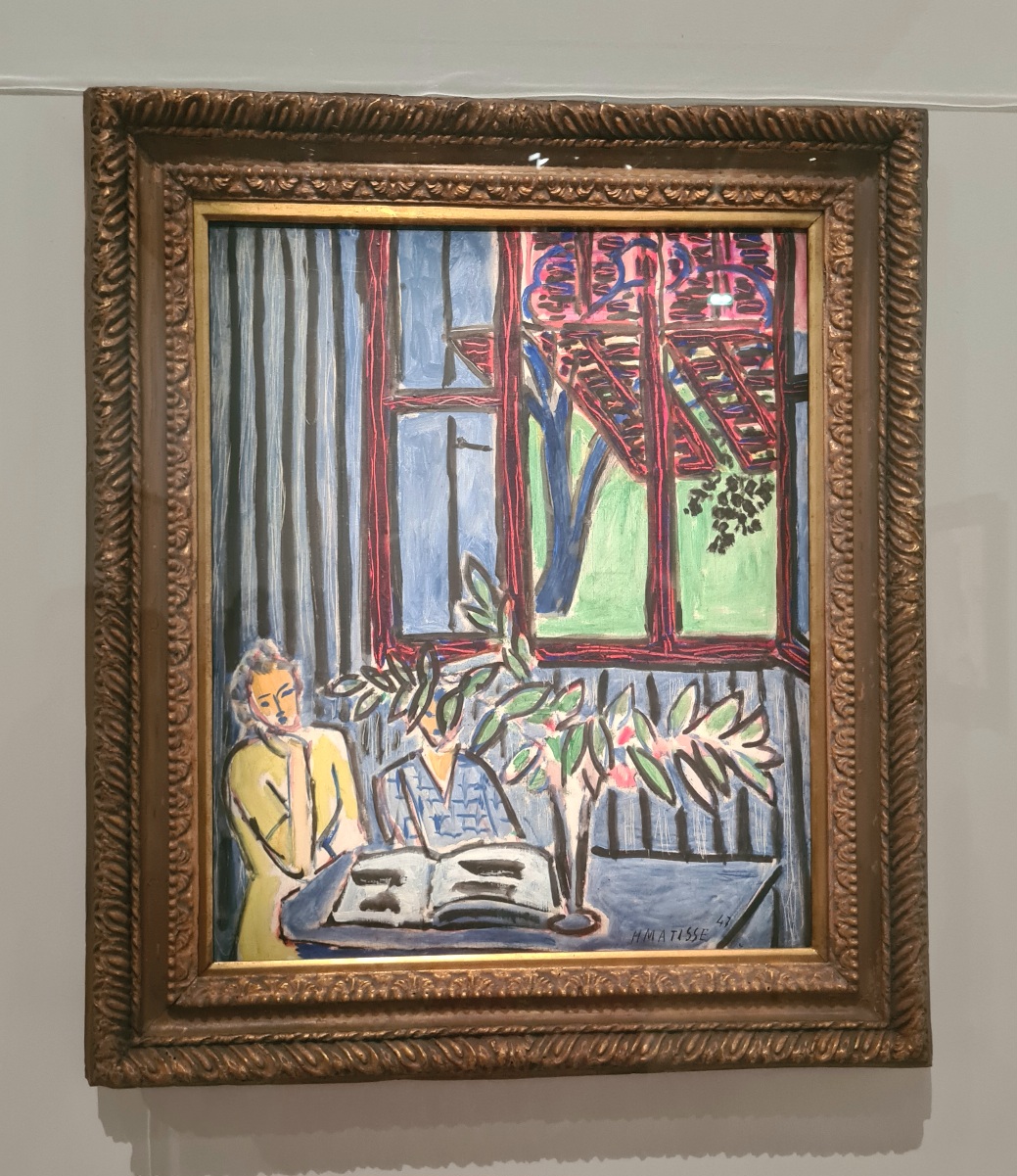
“[…] The artist must see everything as if seeing it for the first time: One must look at life through the eyes of a child; and the loss of this ability prevents you to express yourself in an original—that is, personal—way.
[…] To create is to express what one has within oneself. When I paint a portrait, I revisit my study again and again, and each time I create a new portrait: not the same one that I correct, but rather another portrait that I start anew; and each time, I draw a different being from the same personality. It has often happened to me, in order to explore my study more thoroughly, that I have drawn inspiration from photographs of the same person at different ages: the final portrait may depict them when they were younger, or in a different light than the one they present at the moment they pose, because it is that aspect that will have seemed to me the truest, the most revealing of their true personality.”
How was Matisse able to paint during the war?
Although he could have fled to New York, Matisse decided to stay in France. In 1943, he was forced to leave Nice for his villa, called “Le Rêve” in Vence. In the spring of 1944, his wife Amélie—from whom he had been separated since 1940—was arrested by the Gestapo for acts of resistance, along with his daughter Marguerite, born of a previous marriage. Amélie spent six months in prison before finally being released. Marguerite, meanwhile, was tortured, then deported, and finally released. It was difficult for him to find peace. He worked tirelessly, notably illustrating Baudelaire’s « Les Fleurs du mal ». He would say:
« Perhaps the only answer in none lies in decorating horror, in bringing light to it.»
What about you? What do you think of Matisse’s work? Do these writings shed light on his work? Doesn’t this make the depth of this painter of colors and cutouts all the more profound?
At the very least, it gives me hope: our connection to life and our creativity are infinite; and we all have a choice right up until the very end.